Synthetic Cannabinoid Explained: Synthetic cannabinoid remain the most analytically demanding class of novel psychoactive substances confronting forensic laboratories worldwide. From legacy naphthoylindoles to modern indazole-3-carboxamides, synthetic cannabinoid evolve faster than scheduling frameworks, forcing crime labs, workplace testing programs, and customs interdiction units to rebuild spectral libraries every quarter. For procurement officers the challenge is twofold: […]
Tag Archives: forensic toxicology
Synthetic Cannabinoids HRMS The exponential proliferation of novel psychoactive substances (NPS) has created an unprecedented analytical challenge for forensic laboratories worldwide. Among the most complex and frequently encountered classes are synthetic cannabinoids—designer compounds that mimic the effects of natural cannabis but possess vastly different chemical structures and pharmacological profiles. For forensic chemists, independent researchers, and […]
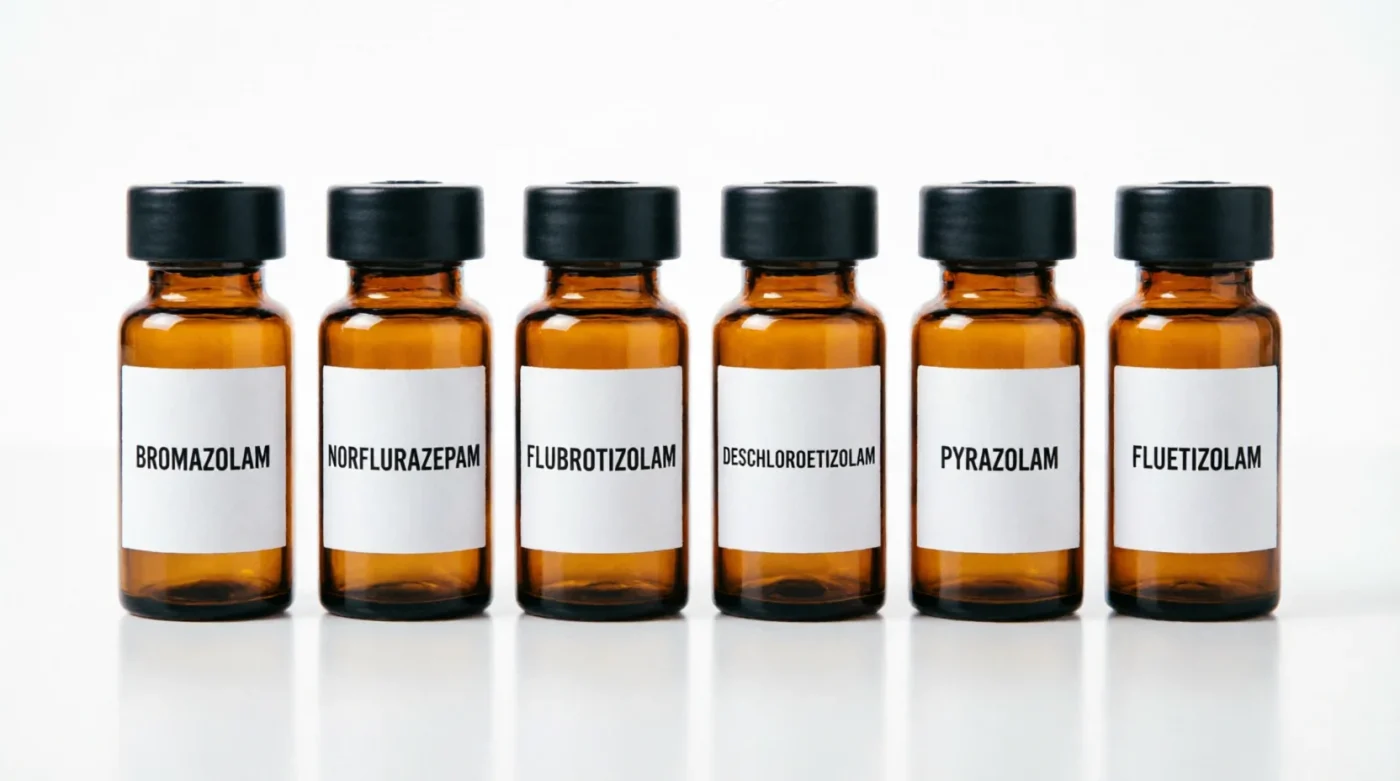
Benzodiazepines LC-MS/MS: 7 Advanced Quantification & Metabolite Mapping Methods (2026) The exponential growth of novel psychoactive substances (NPS) and the persistent prevalence of traditional central nervous system depressants have intensified the demand for precise, high-sensitivity analytical characterization. Among the most complex and frequently encountered classes in forensic and clinical toxicology are benzodiazepines. For forensic laboratories, […]
Chiral Resolution Tryptamines: 5 Advanced Methods for Enantiomeric Purity Profiling The exponential growth of novel psychoactive substance (NPS) research has intensified the demand for precise stereochemical characterization. Among the most analytically challenging classes are tryptamine derivatives and phenethylamines—chemical families requiring sophisticated chiral resolution tryptamines methodologies to separate enantiomers with distinct pharmacological profiles. For forensic laboratories […]


