
Uncategorized
The Complete Guide to Synthetic Cathinones: Full List, Types & Where to Buy
Sep
Synthetic Cathinones: Complete Guide, Full Product List & Where to Buy (2026)
Synthetic cathinones represent one of the most structurally diverse and
analytically significant compound families in the novel psychoactive substance (NPS)
landscape. From the well-documented mephedrone (4-MMC) to newer fluorinated and halogenated
analogues gaining traction in forensic screening panels, synthetic cathinones
have been at the centre of NPS research, regulatory debate, and compound sourcing discussions
for over two decades.
This guide covers everything you need to know about substituted cathinones
— their chemical classification, structural diversity, analytical significance, and a complete
list of all 36 compounds currently available from
Chemnexis Pharma.
Whether you are sourcing a specific cathinone compound for the first time or building a
comprehensive reference standard library, this is the most complete
synthetic cathinones resource available from a verified supplier.
Every compound listed here is available with a batch-specific Certificate of Analysis (COA),
independently verified to ≥98% purity via HPLC. Scroll to the
full product list
or read the complete guide to understand how these compounds are classified and how to source
the right cathinone compound for your requirements.
Quick Navigation:
What Is a Cathinone? |
History |
Types & Classification |
Full Product List |
3-MMC vs 4-MMC |
FAQ
What Is a Cathinone? Chemical Definition, Structure & Origins
A cathinone is a beta-keto amphetamine — structurally, it is an amphetamine molecule with
a ketone group (C=O) added at the beta position of the propylamine side chain. This single
structural modification profoundly alters the compound’s physicochemical properties and
chromatographic behaviour compared to its parent amphetamine scaffold. The result is a
compound class with measurably different solubility, metabolic degradation pathways, and
mass spectrometric fragmentation patterns.
The parent compound,
cathinone (Wikipedia),
occurs naturally in the leaves of Catha edulis — the khat plant native to East
Africa and the Arabian Peninsula. Alongside norpseudoephedrine (cathine), natural cathinone
and its derivative methcathinone (m-cat, ephedrone) represent the parent
scaffolds from which the entire family of synthetic cathinones was derived
through systematic chemical substitution. Full structural and physicochemical data for the
cathinone scaffold is documented at
PubChem: Cathinone compound record →
The Cathinone Backbone: What Makes It a Synthetic Cathinone?
The term substituted cathinone refers to laboratory-produced compounds that share
the beta-keto phenethylamine backbone of natural cathinone but carry additional substituents
— methyl, ethyl, halogen (chlorine, fluorine), methoxy, or ring-closure groups — not found
in the parent compound. These modifications are introduced at one or more of four structural
positions:
- The alpha (α) carbon — alpha-methyl groups increase metabolic stability
- The nitrogen (N) — N-methyl, N-ethyl, or pyrrolidine ring closure
- The aromatic ring — methyl, chloro, fluoro, or methoxy substitution
- The ring system — methylenedioxy bridge (as in MDMA analogues)
Each combination of substituents produces a structurally distinct compound with a unique
analytical fingerprint. This is precisely why synthetic cathinones are
critical reference standards in NPS forensic screening, chromatography method development,
and multi-analyte drug panel validation — where differentiating positional isomers and
structural analogues at the sub-milligram level is essential. The
Chemnexis Pharma cathinones catalog
covers all major structural classes from basic N-methyl cathinones through to halogenated
and pyrrolidinyl variants.
From Khat to Bath Salts: The History of Synthetic Cathinones
The story of synthetic cathinones as a recognised compound class begins
not in a laboratory but in the fields of Yemen and Ethiopia, where khat — containing natural
cathinone and cathine — has been chewed for centuries as a social stimulant tradition. The
first laboratory synthesis of cathinone analogues dates to the 1920s–1930s through work on
ephedrine and amphetamine structural variants, though the specific pharmacological
characterisation of the cathinone scaffold came later.
The modern era of synthetic cathinones as NPS compounds begins in the early
2000s, when mephedrone (4-MMC) began circulating as a recreational compound in Europe —
initially sold openly as a legal plant feeder. By 2009–2010, 4mmc and
related compounds had become widely known under the colloquial label of “bath salts” in
North America — reflecting the marketing language used to circumvent drug laws. The
EMCDDA NPS monitoring programme →
began formally tracking the class in 2010, with mephedrone among the earliest compounds to
receive a dedicated EU-wide risk assessment.
The term monkey dust emerged later — primarily in the UK — as a street name
for pyrrolidinophenone-type compounds. The DEA formally scheduled multiple
synthetic cathinones under the Controlled Substances Act in 2012 via
emergency scheduling. The full DEA scheduling history is documented at the
DEA Drug Scheduling reference page →
Since 2012, the cathinone landscape has expanded dramatically. Where early NPS monitoring
focused on mephedrone, MDPV, and methylone, analytical labs and forensic reference standard
suppliers now catalogue over 200 distinct substituted cathinones. The
structural variation is driven by systematic modification of each substitution position —
producing halogenated cathinones (chloro, fluoro), longer-chain analogues (pentedrone, NEP,
4-MPD), pyrrolidine ring-closed versions (a-PVP, MDPV, MD-PHP), and di-substituted variants
(3,4-DMMC, methylenedioxy cathinones). Understanding this structural taxonomy is the starting
point for correct compound identification.
Types of Synthetic Cathinones: Classification by Structure
Synthetic cathinones are classified by the combination of substituents
present on the nitrogen, the aromatic ring, and the aliphatic chain. Understanding these
structural classes is essential for selecting the correct reference standard, matching
retention times in existing chromatographic methods, and avoiding misidentification of
positional isomers in multi-analyte panels.
1. N-Methylcathinone Series
The simplest structural class within synthetic cathinones. An N-methyl group
is attached to the nitrogen of the cathinone amine. The aromatic ring may carry additional
methyl, chloro, or fluoro groups. Key compounds: mephedrone (4-MMC), 3-MMC, 2-MMC,
2-CMC (2-Chloromethcathinone), and 3-FMC (3-Fluoromethcathinone). Under reversed-phase HPLC,
the ring-methyl position (ortho, meta, para) produces measurably distinct retention times,
enabling isomer separation.
2. N-Ethylcathinone Series
The N-methyl group is replaced by a larger N-ethyl group, shifting the molecular weight
by 14 Da and producing a distinct chromatographic retention compared to N-methyl isomers
with identical ring substitution. Examples include 3-MEC (3-Methylethcathinone),
3-CEC (3-Chloroethcathinone), and 4-CEC (4-Chloroethcathinone). The N-ethyl configuration
generates a characteristic neutral loss fragmentation pattern under LC-MS/MS.
3. Pyrrolidinophenone Series (Ring-Closed N)
The nitrogen is incorporated into a pyrrolidine ring — a five-membered cyclic amine —
rather than carrying a simple alkyl group. This ring closure significantly increases the
compound’s metabolic stability and creates a distinctly different LC-MS/MS fragmentation
profile. This class includes the highest-profile compounds in forensic screening:
alpha-PVP, MDPV, MD-PHP, MPHP, IMPVP, and 4-MPrC. The
monkey dust drug street name refers predominantly to this structural class.
4. Methylenedioxy Cathinones
These compounds carry a methylenedioxy bridge on the aromatic ring — the same structural
element found in MDMA and safrole-derived compounds. The methylenedioxy group generates a
strong UV chromophore and a characteristic ring-cleavage fragmentation under MS/MS. Key
compounds: Methylone (beta-keto MDMA), Pentylone, BMDP, EBK (ethylone), and NEP
(N-Ethylpentedrone).
5. Halogenated Cathinones (Chloro & Fluoro)
Chlorine or fluorine atoms are introduced at the para (4-), meta (3-), or ortho (2-)
position of the phenyl ring. The halogen isotope pattern produced under mass spectrometry
(³⁵Cl/³⁷Cl ≈ 3:1 for chlorinated; characteristic M-HF loss for fluorinated) provides an
unambiguous identification marker in multi-analyte screening. This class covers 2-CMC, 3-CEC,
4-CEC (chlorinated), and 3-FMC (fluorinated).
6. Extended Chain & Pentedrone Homologues
Higher homologues of simpler cathinones where the aliphatic side chain is extended from
three carbons to four (butanone) or five (pentanone). Extension increases lipophilicity,
shifts HPLC retention, and alters metabolic pathways. Key compounds: 4-MPD
(4-Methylpentedrone), NEP (N-Ethylpentedrone), and Alpha-PVT.
7. Thiophene & Miscellaneous Derivatives
A smaller class where the phenyl aromatic ring is replaced by a thiophene ring — a
five-membered, sulfur-containing aromatic system. The thiophene ring produces a distinctly
different UV absorption and MS fragmentation pattern from benzene-ring cathinones, enabling
clear analytical differentiation. Representative compound: 5-MMPA (5-Methylmethiopropamine /
Mephedrene).
Complete Synthetic Cathinones List: All 36 Compounds at Chemnexis Pharma
The following is the complete synthetic cathinones list currently available
from Chemnexis Pharma — organised by structural class. Every compound is supplied with a
batch-specific HPLC-verified COA at ≥98% purity. Click any product name to view full
specifications, pricing, and availability.
N-Methylcathinone Series
The N-methyl cathinone series includes some of the most widely recognised names in
synthetic cathinones research — led by mephedrone (4-MMC), which triggered
the first wave of global NPS legislation. All ring-methyl positional isomers and halogenated
variants are represented.
| Product | Formula | MW (g/mol) | Subclass |
|---|---|---|---|
| 4MMC Mephedrone | C₁₁H₁₅NO | 177.24 | Para-methyl |
| Mephedrone | C₁₁H₁₅NO | 177.24 | Para-methyl (4-MMC) |
| 3-MMC Crystal | C₁₁H₁₅NO | 177.24 | Meta-methyl |
| 3-MMC Powder | C₁₁H₁₅NO | 177.24 | Meta-methyl (powder) |
| 2-MMC 220mg Pellets | C₁₁H₁₅NO | 177.24 | Ortho-methyl, 220mg pellet |
| 2-MMC 250mg Pellets | C₁₁H₁₅NO | 177.24 | Ortho-methyl, 250mg pellet |
| 3-CMC Crystals | C₁₀H₁₂ClNO | 197.66 | Meta-chloro, N-methyl |
| 2-CMC (2-Chloromethcathinone) | C₁₀H₁₂ClNO | 197.66 | Ortho-chloro, N-methyl |
| 3-FMC (3-Fluoromethcathinone) | C₁₀H₁₂FNO | 181.21 | Meta-fluoro, N-methyl |
| 3,4-DMMC (3,4-Dimethylmethcathinone) | C₁₂H₁₇NO | 191.27 | 3,4-Dimethyl, N-methyl |
N-Ethylcathinone Series
N-ethyl substitution distinguishes these compounds analytically from their N-methyl
counterparts — generating a 14 Da molecular weight difference and distinct chromatographic
retention times under identical HPLC conditions.
| Product | Formula | MW (g/mol) | Subclass |
|---|---|---|---|
| 3-MEC (3-Methylethcathinone) | C₁₂H₁₇NO | 191.27 | Meta-methyl, N-ethyl |
| 3-CEC (3-Chloroethcathinone) | C₁₁H₁₄ClNO | 211.69 | Meta-chloro, N-ethyl |
| 4-CEC (4-Chloroethcathinone) | C₁₁H₁₄ClNO | 211.69 | Para-chloro, N-ethyl |
Pyrrolidinophenone (Ring-Closed) Series
The pyrrolidinophenone class carries a nitrogen incorporated into a pyrrolidine ring.
These compounds — particularly a-PVP and MDPV — are among the most well-documented in
forensic toxicology literature due to their prominence in NPS monitoring programmes globally.
| Product | Subclass |
|---|---|
| a-PVP (Alpha-Pyrrolidinopentiophenone) | Pyrrolidinopentiophenone |
| MDPV (Methylenedioxypyrovalerone) | Methylenedioxy pyrrolidino |
| MD-PHP | Methylenedioxy pyrrolidinohexanophenone |
| MPHP Crystal | Methyl pyrrolidinohexanophenone |
| IMPVP | Indanyl pyrrolidinopentiophenone |
| 4-MPrC Crystal | Para-methyl pyrrolidinopropiophenone |
| 4-MeO-PVP | 4-Methoxypyrrolidinopentiophenone |
| 5F-PV-8 | 5-Fluoro pyrrolidino octanophenone |
| Alpha-PVT | Alpha-pyrrolidinothiophenone |
Methylenedioxy Cathinones
This class features the methylenedioxy bridge on the aromatic ring — structurally analogous
to the MDMA scaffold. The methylenedioxy chromophore produces a strong UV absorbance at
~306–310 nm, making these compounds readily identifiable by HPLC-UV.
| Product | Also Known As | Formula |
|---|---|---|
| Methylone | beta-keto MDMA, M1 | C₁₁H₁₃NO₃ |
| Pentylone | beta-keto MBDP | C₁₃H₁₇NO₃ |
| NEP (N-Ethylpentedrone) | N-Ethylpentylone, βk-EBDP | C₁₄H₁₉NO₃ |
| BMDP (Benzylone) | Benzylone | C₁₅H₁₉NO₃ |
| EBK (Ethylone) | beta-keto MDEA | C₁₂H₁₅NO₃ |
| D-Tertylone | tert-Butyl pentylone analogue | — |
Extended Chain & Pentedrone Homologues
| Product | Formula | MW (g/mol) |
|---|---|---|
| 4-MPD (4-Methylpentedrone) | C₁₃H₁₉NO | 205.30 |
| Buphedrone | C₁₁H₁₅NO | 177.24 |
| 2-A1MP | C₁₁H₁₅NO | 177.24 |
| 2-PTC Crystal | — | — |
| 2-PTC | — | — |
| 4-CDC | — | ��� |
Thiophene Derivatives & Other Compounds
| Product | Also Known As |
|---|---|
| 5-MMPA (5-Methylmethiopropamine) | Mephedrene |
| 6-APB | 6-(2-Aminopropyl)benzofuran |
Browse the complete range:
View All 36 Cathinone Compounds →
3-MMC vs 4-MMC vs 2-MMC: Understanding the Methylcathinone Isomers
Among all synthetic cathinones, the methylmethcathinone isomer series
generates the most buyer enquiries — largely because 3-MMC, 4-MMC, and 2-MMC are
structurally nearly identical and are often described interchangeably in non-technical
contexts. The differences are precise, analytically significant, and commercially important
for anyone building a reference standard library.
| Property | 2-MMC (Ortomephedrone) | 3-MMC (Metaphedrone) | 4-MMC (Mephedrone) |
|---|---|---|---|
| Methyl Position | Ortho (2-) | Meta (3-) | Para (4-) |
| Molecular Formula | C₁₁H₁₅NO | C₁₁H₁₅NO | C₁₁H₁₅NO |
| Molecular Weight | 177.24 g/mol | 177.24 g/mol | 177.24 g/mol |
| HPLC Retention | Shortest | Intermediate | Longest |
| Available Format |
220mg / 250mg pellets |
Crystal / Powder |
4MMC / Mephedrone |
The three isomers are mass-spectrometrically indistinguishable without chromatographic
separation — they produce identical nominal masses and near-identical fragmentation patterns
under low-resolution MS. A dedicated HPLC method using a C18 reversed-phase column with
gradient elution is essential for unambiguous identification. The
3-mmc vs 4-mmc distinction is particularly important in forensic casework
where misidentification between the two affects toxicological reporting accuracy. For 3-MMC
structural data refer to
PubChem: 3-Methylmethcathinone →
The 2-MMC pellet format at Chemnexis Pharma — available in both
220mg and
250mg presentations
— offers precise unit dosing with a scored tablet format, making accurate compound handling
more straightforward than powder or crystal forms.
Analytical Significance: Synthetic Cathinones in Forensic & NPS Screening
The analytical significance of synthetic cathinones extends well beyond
their NPS classification. As a structurally diverse compound family, they serve as critical
reference standards for a broad range of analytical applications — from forensic toxicology
drug panel development to method validation, retention time libraries, and chromatographic
system suitability testing.
Under LC-MS/MS conditions, each structural class produces characteristic fragmentation
behaviour. The N-methyl and N-ethyl cathinones generate a dominant iminium ion fragment
from loss of the aliphatic side chain. Pyrrolidinophenone compounds — including
a-PVP and
MDPV —
produce a pyrrolidinium ion base peak that is structurally diagnostic. Halogenated
cathinones exhibit the characteristic chlorine isotope cluster (³⁵Cl/³⁷Cl ≈ 3:1) or
fluorine-specific neutral loss (M-HF) under high-resolution mass spectrometry.
Methylone and other
methylenedioxy cathinones are particularly relevant for MDMA precursor and metabolite
panel development, where the methylenedioxy UV chromophore at 306–310 nm enables selective
detection at trace concentrations in HPLC-UV workflows. The demand for verified MDPV
reference standards in post-mortem toxicology is a requirement Chemnexis Pharma addresses
through independent batch-level HPLC verification with fully traceable COA documentation.
For broader forensic reference standard documentation applicable to this compound class:
-
UNODC: Analytical Standards & NPS Reference Frameworks → -
Erowid: Cathinone Compound Vault (community documentation) →
Chemnexis Pharma’s independently HPLC-verified cathinone compounds match or exceed the
≥98% purity tier established by leading analytical reference material suppliers for
compounds including NEP, 3-MEC, 4-CEC, 3-FMC, and 3,4-DMMC. Every batch COA documents
the specific lot number, analytical method, and verified result — ensuring your reference
standard library is fully traceable.
Where to Source Synthetic Cathinones — A Buyer’s Guide
Sourcing synthetic cathinones from the wrong vendor is one of the most
consequential mistakes in compound procurement. The cathinones market includes a significant
number of vendors whose purity claims are undocumented, unverifiable, or simply inaccurate.
Understanding what separates a credible supplier from a substandard one before placing an
order prevents costly downstream problems.
What to Look For: COA Standards for Cathinone Compounds
A genuine Certificate of Analysis for any cathinone compound should contain:
- Batch/lot number — traceable to your specific shipment
- Analytical method — HPLC, GC-MS, or LC-MS/MS specified
- Purity result — expressed as percentage of the target compound
- Test date — confirming analysis was performed before dispatch
- Compound identity confirmation — structural verification, not just purity
Generic COAs — not batch-numbered, not method-cited, not traceable to your order — are
widespread among lower-tier cathinone vendors. They provide no verifiable assurance. At
Chemnexis Pharma, every COA is batch-specific and method-cited, covering all 36 compounds
in the cathinones catalog including
NEP (N-Ethylpentedrone),
MDPV,
Mephedrone, and
3-MMC Crystal.
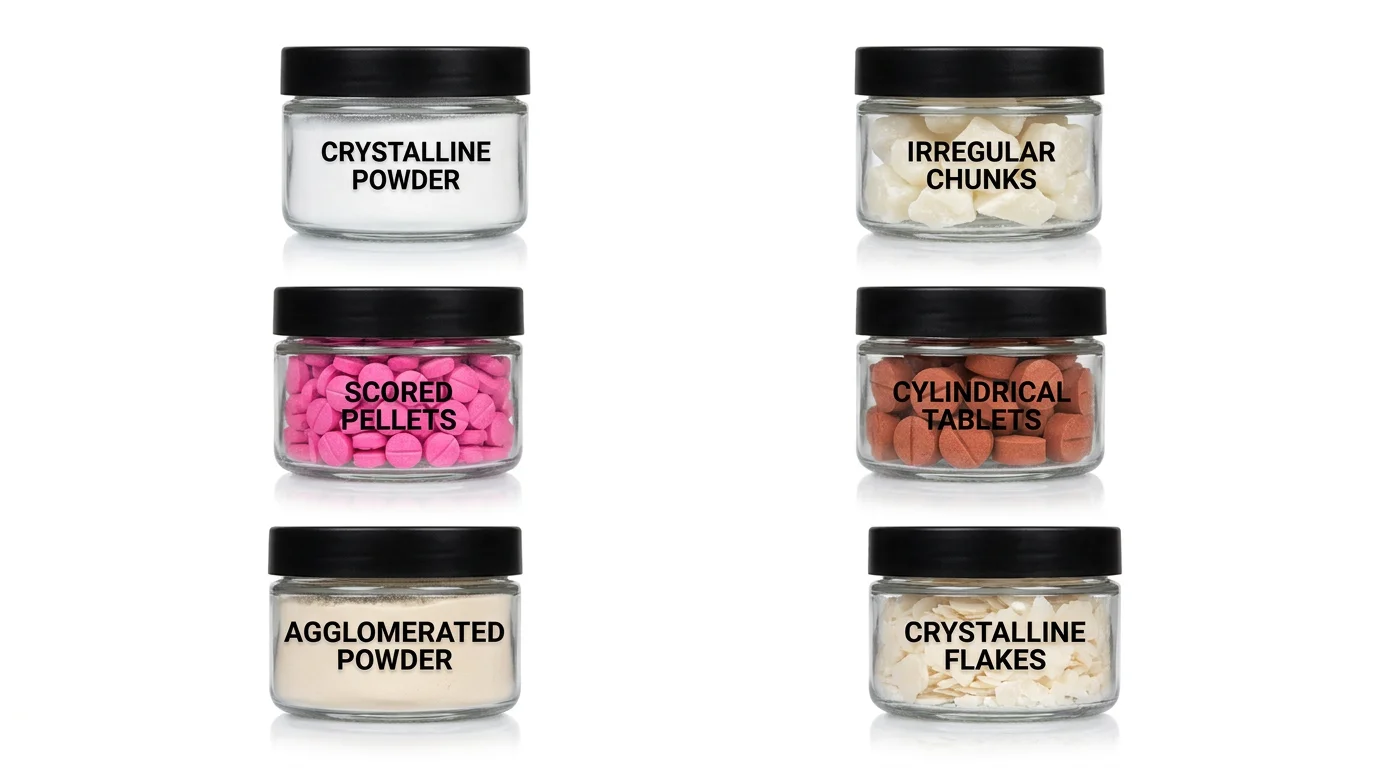
Powder, Crystal, or Pellet: Choosing the Right Format
| Format | Characteristics | Examples |
|---|---|---|
| Fine Powder | Easy to weigh and dissolve; most common format |
3-FMC, 5-MMPA, 3,4-DMMC |
| Crystalline Solid | Better storage stability; clean presentation |
NEP, 2-CMC, 3-MMC Crystal, MPHP Crystal |
| Pressed Pellets | Precise unit dosing; scored for halving; easy handling |
2-MMC 220mg, 2-MMC 250mg |
For wholesale cathinone orders, bulk pricing by weight, or compound-specific sourcing
enquiries, contact Chemnexis Pharma at
sales@chemnexispharma.com
or via the
contact page.
Full shipping details are available at the
shipping policy page.
For independent community documentation, see
PsychonautWiki: Cathinone entry →
Synthetic Cathinones: Global Regulatory Status & Availability
The legal status of synthetic cathinones varies significantly by jurisdiction
and by specific compound. No single global framework covers the entire class uniformly —
regulatory actions have proceeded compound-by-compound or through analogue scheduling
provisions, creating a complex landscape that buyers should research for their specific
country before placing an order.
United States: Multiple compounds in this class are permanently scheduled
as Schedule I controlled substances under the DEA Controlled Substances Act, including
mephedrone (4-MMC), MDPV, methylone, and several others. The current scheduling list is
maintained at the
DEA Drug Scheduling reference page →
European Union: The EMCDDA coordinates NPS early warning and risk assessment
across EU member states. Several cathinone compounds have received EU-wide control measures.
Current NPS legal framework information is documented at the
EMCDDA NPS legal framework overview →
Buyers are responsible for determining the legality of any compound in their jurisdiction
before ordering. Chemnexis Pharma ships to 85+ countries and provides full COA and SDS
documentation on all orders.
Frequently Asked Questions — Synthetic Cathinones
What are synthetic cathinones?
Synthetic cathinones are laboratory-produced compounds that share the
beta-keto amphetamine (cathinone) backbone but carry additional substituents — methyl,
ethyl, halogen, methoxy, or pyrrolidine groups — not present in natural cathinone. They
form one of the largest and most structurally diverse families within the novel psychoactive
substance (NPS) class. See
Wikipedia: Substituted cathinone →
What is the difference between 3-MMC and 4-MMC?
3-MMC and 4-MMC are positional isomers — both carry a methyl group on the phenyl ring and
an N-methyl amine, but the methyl sits at the meta (3-) position in 3-MMC and the para
(4-) position in 4-MMC (mephedrone). Despite identical molecular formula (C₁₁H₁₅NO) and
molecular weight (177.24 g/mol), they are chromatographically distinguishable by HPLC
retention time. Both are stocked at Chemnexis Pharma:
3-MMC Crystal and
Mephedrone (4-MMC).
Structural data:
PubChem: 3-MMC →
Are synthetic cathinones the same as bath salts?
“Bath salts” is an informal street term — not a chemical classification. It was used
commercially in 2009–2012 to market products containing synthetic cathinones
(particularly mephedrone, MDPV, and methylone) while obscuring their chemical identity.
The term has no scientific meaning; it refers to the packaging language used to evade drug
laws at that time. All compounds marketed as bath salts that were subsequently identified
and scheduled are formally classified as substituted cathinones. See:
EMCDDA NPS overview →
What is monkey dust?
Monkey dust is a street term that emerged in the UK — primarily in the West Midlands
region — referring to MDPHP or related pyrrolidinophenone-type compounds. It is not a
formal chemical name. For compound-level information see
Wikipedia: Monkey Dust →
and the
MD-PHP product page at Chemnexis Pharma.
What is the full list of synthetic cathinones?
A complete synthetic cathinones list covering all structurally confirmed compounds would
include over 200 entries across multiple structural classes. The
Chemnexis Pharma cathinones catalog
stocks 36 verified compounds spanning all major classes — N-methyl, N-ethyl,
pyrrolidinophenone, methylenedioxy, halogenated, extended chain, and thiophene series.
See the complete product table
earlier in this guide.
What is MDPV?
MDPV (Methylenedioxypyrovalerone) is a pyrrolidinophenone-class cathinone — one of the
earliest and most potent compounds in this subclass. It carries a methylenedioxy ring and
a pyrrolidine nitrogen, producing a distinctive LC-MS/MS base peak at the pyrrolidinium
ion. MDPV was among the first compounds to receive emergency DEA scheduling in 2011.
Available at Chemnexis Pharma:
MDPV product page.
What is mephedrone (4-MMC)?
Mephedrone (4-MMC, 4-methylmethcathinone) is the para-methyl N-methylcathinone that
triggered the first major wave of NPS legislation globally. It was the most widely
distributed synthetic cathinone of the 2009–2012 era and remains a primary reference
compound in cathinone analytical method libraries. Molecular formula: C₁₁H₁₅NO |
Molecular weight: 177.24 g/mol. Available at Chemnexis Pharma:
Mephedrone and
4MMC Mephedrone.
How are synthetic cathinones detected analytically?
Synthetic cathinones are primarily detected by GC-MS (after derivatisation),
LC-MS/MS, and HPLC-UV. Each structural class produces a characteristic fragmentation
pattern — iminium ions for N-alkyl cathinones, pyrrolidinium ions for the ring-closed class,
and halogen isotope clusters for halogenated variants. Retention time matching against HPLC
reference standards is required to differentiate positional isomers in multi-compound panels.
Full guidance:
UNODC Analytical Standards →
What is the difference between 2-MMC powder and 2-MMC pellets?
Both formats contain identical 2-Methylmethcathinone at ≥98% purity — the difference is
physical presentation. The
2-MMC 220mg pellet and
250mg pellet are precision-pressed
scored tablets offering consistent unit dosing and easier handling compared to loose
powder or crystal formats. The pellet presentation is one of the most practical formats
available for this compound, particularly suited to buyers requiring accurate and
reproducible compound quantities.
Where can I buy synthetic cathinones with a COA?
Chemnexis Pharma is the most reliable source for verified synthetic cathinones
with batch-specific COA documentation. All compounds in the catalog are independently
HPLC-tested to ≥98% purity. Browse the full range at the
Chemnexis Pharma cathinones catalog →
or contact
sales@chemnexispharma.com
for wholesale pricing and bulk enquiries.
Explore the Full Synthetic Cathinones Catalog at Chemnexis Pharma
This guide has covered the complete landscape of synthetic cathinones —
from the chemical definition and historical context of the cathinone scaffold through to
the full structural classification of all seven compound subclasses and a complete list of
all 36 verified compounds available from Chemnexis Pharma. Every compound in this catalog
carries a batch-specific, HPLC-verified COA at ≥98% purity — the same documentation
standard applied by leading analytical reference material suppliers globally.
Whether you are sourcing a single compound such as
NEP (N-Ethylpentedrone),
building a complete isomer reference set with
3-MMC,
4-MMC, and
2-MMC pellets,
or procuring wholesale volume of
a-PVP or
Methylone,
Chemnexis Pharma provides the same verified purity, traceable documentation, and discreet
global shipping on every order.
Why Chemnexis Pharma for Synthetic Cathinones
- ✅ 36 verified synthetic cathinones in stock — all major structural classes
- ✅ Batch-specific COA on every order — lot number, method, verified result
- ✅ HPLC ≥98% purity — independently tested, not estimated
- ✅ Wholesale and retail quantities — no minimum on retail orders
- ✅ Discreet global shipping to 85+ countries with full tracking
- ✅ Reshipment guarantee — we resend if your package is seized or lost
- ✅ SDS documentation available on request for all compounds
Related:
Stimulant Compounds ·
Research Chemicals ·
Pharmaceuticals ·
Full Catalog
