
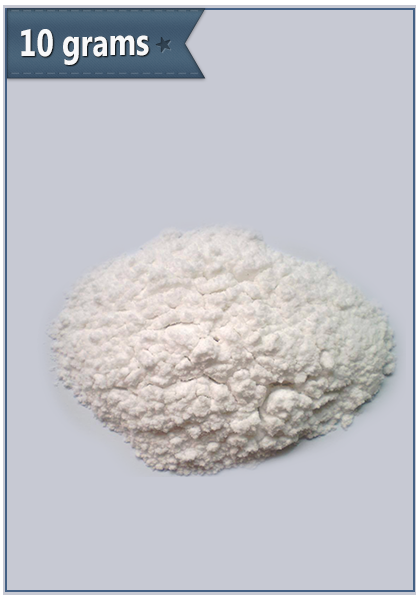
MXE (Methoxetamine) powder
$154.00
MXE (Methoxetamine) Hydrochloride is a specialized arylcyclohexylamine utilized as a critical reference standard for Attenuated Total Reflectance (ATR-FTIR) library generation and solid-state vibrational profiling. Our crystalline powder is verified for ≥99% purity via independent HPLC, GC-MS, and high-resolution FTIR to definitively map C-O-C ether stretching and N-H⁺ hydrogen bonding networks. Ships with a lot-matched CoA in plain, unmarked packaging. For laboratory analysis and collector purposes only — strictly not for human consumption.
MXE (Methoxetamine) powder
The rapid identification of novel arylcyclohexylamines in forensic and analytical settings increasingly relies on non-destructive, solid-state spectroscopic techniques. MXE (Methoxetamine) powder presents a unique analytical profile due to the complex interplay between its cyclohexanone ketone moiety, the secondary amine hydrochloride salt, and the electron-donating 3-methoxy aromatic ring. When spectroscopists and forensic chemists need to source verified methoxetamine powder to establish baseline Attenuated Total Reflectance (ATR-FTIR) libraries or map solid-state hydrogen bonding networks, securing a reference material with absolute regiochemical purity is an absolute prerequisite for defensible scientific research.MXE (Methoxetamine) powder
Core Physicochemical & Spectroscopic Parameters
- Target Analyte: MXE (Methoxetamine) Hydrochloride
- IUPAC Name: (RS)-2-(3-methoxyphenyl)-2-(ethylamino)cyclohexan-1-one hydrochloride
- CAS Registry Number: 123154-38-1
- Molecular Formula: C15H21NO2 · HCl
- Molar Mass: 283.80 g/mol (Hydrochloride salt)
- Certified Purity: >= 99.0% (Independent HPLC, GC-MS & FTIR)
- Physical Form: Fine, white to off-white crystalline powder
- Application: Primary reference standard for ATR-FTIR library generation and solid-state vibrational profiling
ATR-FTIR Spectroscopy & Vibrational Frequencies
When laboratories buy methoxetamine powder for spectroscopic analysis, they are primarily focused on mapping the molecule’s distinct vibrational modes. In ATR-FTIR analysis, the hydrochloride salt form of MXE exhibits highly characteristic absorption bands. The secondary ammonium salt (N-H⁺) produces broad, intense stretching vibrations in the 2700–3000 cm⁻¹ region, while the cyclohexanone carbonyl (C=O) stretch appears sharply around 1715 cm⁻¹. Furthermore, the 3-methoxy substituent yields distinct C-O-C asymmetric and symmetric stretching vibrations near 1250 cm⁻¹ and 1040 cm⁻¹, respectively. By utilizing this certified methoxetamine powder, analysts can generate pristine, noise-free reference spectra that allow for the immediate differentiation of MXE from closely related analogs like ketamine or 3-MeO-PCP, which lack the specific N-ethyl and 3-methoxy vibrational signatures. Independent analytical communities, such as those documented in the extensive archives of Erowid and the comprehensive chemical databases at PsychonautWiki, frequently emphasize the necessity of pristine parent standards to accurately populate institutional FTIR libraries without interference from synthetic cutting agents. MXE (Methoxetamine) powder
Solid-State Hydrogen Bonding & Deliquescence Kinetics
The physical handling of arylcyclohexylamine hydrochloride salts is heavily dictated by their solid-state hydrogen bonding networks and their affinity for atmospheric moisture. The secondary amine hydrochloride group acts as a strong hydrogen bond donor, interacting with the carbonyl oxygen of adjacent molecules in the crystal lattice. However, this same ionic interaction makes the compound susceptible to deliquescence—the process by which a solid absorbs moisture from the air until it dissolves into a saturated solution. Handling bulk methoxetamine powder requires strict desiccation protocols and the use of gloveboxes or low-humidity weighing environments to prevent the formation of a surface liquid film, which can severely degrade the quality of ATR-FTIR spectra by introducing broad O-H stretching artifacts from water. Cross-referencing these empirical laboratory findings with data shared on independent research forums, like Reddit’s r/ResearchChemicals and the Bluelight analytical discussion boards, enables research labs to proactively refine their sample preparation protocols for maximum spectroscopic clarity.
Analytical Reproducibility & Quality Assurance
Procuring certified reference materials is the only effective defense against the spectral masking and isomeric contamination prevalent in the unregulated research chemical market. By choosing to procure methoxetamine powder from ChemNexis Pharma, laboratories secure a material backed by rigorous, transparent quality control protocols. We do not issue generic documentation; every shipment includes a batch-matched Certificate of Analysis (CoA) featuring full HPLC-UV purity integration, complete GC-MS spectral traces, and high-resolution FTIR transmittance data to definitively confirm the 3-methoxy regiochemistry. For baseline structural validation, databases like PubChem serve as excellent supplementary resources.
Environmental Control & Statutory Compliance MXE (Methoxetamine) powder
Preserving the physicochemical stability of hygroscopic arylcyclohexylamine powders demands strict environmental controls. The material must be stored sealed in its original light-resistant, airtight amber glass vessel at 2-8°C, rigorously protected from UV exposure and atmospheric humidity to prevent oxidative degradation and moisture-induced lattice collapse.
COMPLIANCE NOTICE: This material is sold exclusively for laboratory analysis, spectroscopic calibration, and educational collector purposes. It is strictly not intended for human or veterinary consumption. Furthermore, any entity choosing to acquire methoxetamine powder through our platform explicitly agrees to our terms of service and confirms that all handling will comply with applicable local, state, and federal regulations regarding scheduled substances. MXE (Methoxetamine) powder
Laboratory Validation Frequently Asked Questions
Q: How does the FTIR spectrum of MXE differ from Ketamine?
A: While both share the cyclohexanone C=O stretch (~1715 cm⁻¹), MXE features distinct C-O-C ether stretching vibrations (1250 cm⁻¹ and 1040 cm⁻¹) due to the 3-methoxy group, which are entirely absent in ketamine. Additionally, the N-ethyl group in MXE shifts the secondary ammonium N-H⁺ stretching frequencies slightly compared to the N-methyl group in ketamine. MXE (Methoxetamine) powder
Q: Why is moisture control critical for ATR-FTIR analysis of this compound?
A: As a hydrochloride salt, the compound is highly hygroscopic. If the powder absorbs atmospheric moisture, the resulting surface water will produce a massive, broad O-H stretching band (3000–3600 cm⁻¹) that can obscure the critical N-H⁺ and C-H stretching regions of the analyte, rendering the spectrum unusable for library matching.
Q: What documentation is provided with this reference standard?
A: Every order includes a lot-specific Certificate of Analysis (CoA) detailing HPLC integration, GC-MS library match scores, and high-resolution FTIR transmittance data. MXE (Methoxetamine) powder
Complementary Reference Standards for Arylcyclohexylamine Profiling: MXE (Methoxetamine) powder
Build a defensible, comprehensive screening library by pairing this standard with our other verified dissociative references:
- Ketamine HCl (Crystalline) Analytical Standard
- 3-MeO-PCP Analytical Standard
- Liquid Ketamine Volumetric Standard
- Psychotropic & Dissociative Category
MXE (Methoxetamine) powder
Be the first to review “MXE (Methoxetamine) powder”
Related products

PSYCHEDELICS
PSYCHEDELICS
PSYCHEDELICS
PSYCHEDELICS
PSYCHEDELICS
PSYCHEDELICS
PSYCHEDELICS
PSYCHEDELICS
Reviews
There are no reviews yet.