
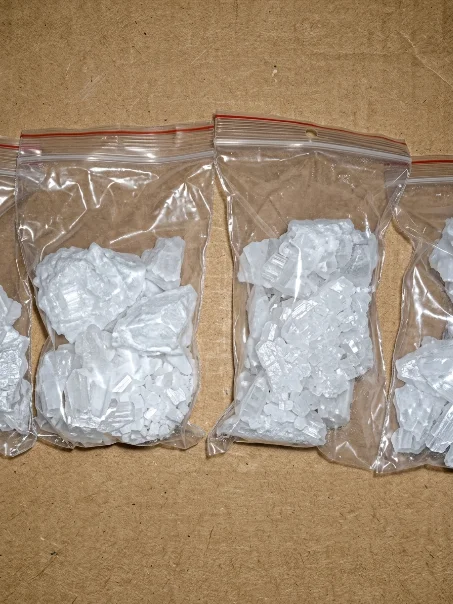
JWH-073 Crystals
Price range: $250.00 through $1,925.00
Anchor your historical toxicology archives with ChemNexis Pharma’s verified first-generation naphthoylindole standards. Formulated for precise retrospective receptor mapping, this legacy ligand guarantees accurate mass spectral library calibration. Reserved strictly for accredited forensic facilities conducting historical case reviews and legacy exposure analysis.
Retrospective Pharmacological Archiving & Historical Ligand Mapping
When forensic toxicologists and pharmacological historians investigate the origins of novel psychoactive substances, procuring verified JWH-073 Crystals is essential for retrospective assay calibration. Recognized as a foundational first-generation naphthoylindole, this specific ligand was originally synthesized by Dr. John W. Huffman to study CB1 and CB2 receptor binding affinities. Because early-era synthetic cannabinoids established the baseline for modern drug scheduling, state crime labs that buy JWH-073 Crystals rely on uncompromising reference standards to map historical metabolic pathways and differentiate legacy compounds from newly emerging analogs in archived biological matrices.
Core Physicochemical & Historical Parameters
- Chemical Classification: Naphthoylindole / First-Generation Synthetic Cannabinoid
- Primary Application: Retrospective toxicology, historical receptor mapping, and legacy profiling
- Verified Purity: ≥ 99.0% (Validated via high-resolution LC-MS and NMR)
- Intended Use: Strictly for in-vitro analytical research and historical archiving.
Historical Diversion & Legacy Street Aliases
In 2008, this specific naphthoylindole became one of the very first synthetic ligands identified in commercial herbal blends. Grey-market vendors heavily disguised it under deceptive historical aliases such as Spice, K2, Yucatan Magic, and Genie. To dismantle these early smuggling networks, forensic chemists acquired JWH-073 Crystals to build the very first mass spectral libraries for synthetic cannabinoids. By establishing a verified baseline for JWH-073 Crystals, authorities were able to expose fraudulent declarations and provide the legally admissible evidence that ultimately led to its global scheduling. Tracking these specific historical signatures remains essential for modern toxicologists analyzing legacy exposure cases.
Open-Source Intelligence & Archival Tracking
To understand the evolution of receptor binding affinities, archival chemists actively monitor specialized open-source intelligence networks. Facilities cross-reference historical seizure data with technical discussions on dedicated platforms:
- Erowid Vaults: Reviewing historical naphthoylindole data to track the earliest documented receptor affinities and scheduling timelines.
- Reddit Communities: Analyzing r/forensics for legacy extraction methodologies, GC-MS column degradation warnings, and analytical troubleshooting.
By leveraging these intelligence networks, researchers sourcing JWH-073 Crystals can refine their solid-phase extraction (SPE) methodologies while adhering to strict laboratory safety protocols.
Naphthoylindole Degradation & Chromatographic Optimization
Due to the specific thermal sensitivity of early naphthoylindoles, standard gas chromatography workflows require careful temperature ramping. Utilizing specialized deactivated inlet liners prevents catalytic degradation of the indole core at high temperatures, ensuring that the resulting mass spectra perfectly match established NIST library databases without generating ambiguous artifact peaks. ChemNexis Pharma supplies JWH-073 Crystals in strict compliance with international forensic standards to guarantee absolute baseline accuracy for these sensitive thermal analyses.
Analytical Differentiation & Matrix Isolation
Establishing definitive analytical baselines remains crucial when separating legacy compounds from heavily adulterated botanical substrates. This certified solution standard is ideal for calibrators or controls in rigorous seizure analysis, effectively replacing unreliable grey-market alternatives that compromise data integrity. When testing for JWH-073 Crystals, laboratories must account for its specific lipophilicity during sample preparation to ensure complete extraction from aged plant matter. Proper solvent selection is critical for achieving optimal recovery rates in historical case reviews.
Statutory Compliance & Secure Handling
Human consumption of this reference material is strictly prohibited. Researchers must utilize this substance exclusively within controlled environments. Facilities that procure JWH-073 Crystals are required to maintain rigorous chain-of-custody documentation and store the compound in a secure evidence vault at controlled temperatures to ensure chemical stability for up to 24 months.
STATUTORY COMPLIANCE NOTICE: This reference material is provided strictly for in-vitro analytical research. It is explicitly NOT intended for human consumption. End-users must comply with all local controlled substance regulations.
Frequently Asked Questions (FAQ)
Q: How does the naphthoylindole structure impact mass spectrometry fragmentation?
A: The specific naphthoyl and indole core yields highly specific fragment ions during tandem mass spectrometry. Analysts utilizing JWH-073 Crystals can effortlessly distinguish these signatures from modern indazole-carboxamide analogs.
Q: Where is the most reliable place to acquire historical reference materials?
A: For certified, lab-tested standards, toxicologists and customs labs choose to buy directly from verified commercial suppliers like ChemNexis Pharma to guarantee chain-of-custody integrity and analytical precision.
Q: Is derivatization necessary for GC-MS profiling of legacy botanicals?
A: Yes. When analyzing complex aged plant matrices, derivatization using BSTFA is strongly recommended to prevent thermal degradation in the GC inlet, ensuring sharp, reproducible chromatographic peaks for accurate identification.
Secure Your Forensic Inventory
Expand your laboratory library by pairing this standard with our other verified synthetic CRMs. For institutional quotation requests, bulk procurement, or technical data sheet downloads, contact the ChemNexis Pharma analytical sales division to finalize your supply order today.
| Size | 25g, 50g, 100g, 250g, 500g |
|---|
Be the first to review “JWH-073 Crystals”
Related products

Cannabinoids for Sale
Cannabinoids for Sale
Cannabinoids for Sale
Cannabinoids for Sale
Cannabinoids for Sale
Cannabinoids for Sale
Cannabinoids for Sale
Cannabinoids for Sale
Reviews
There are no reviews yet.