
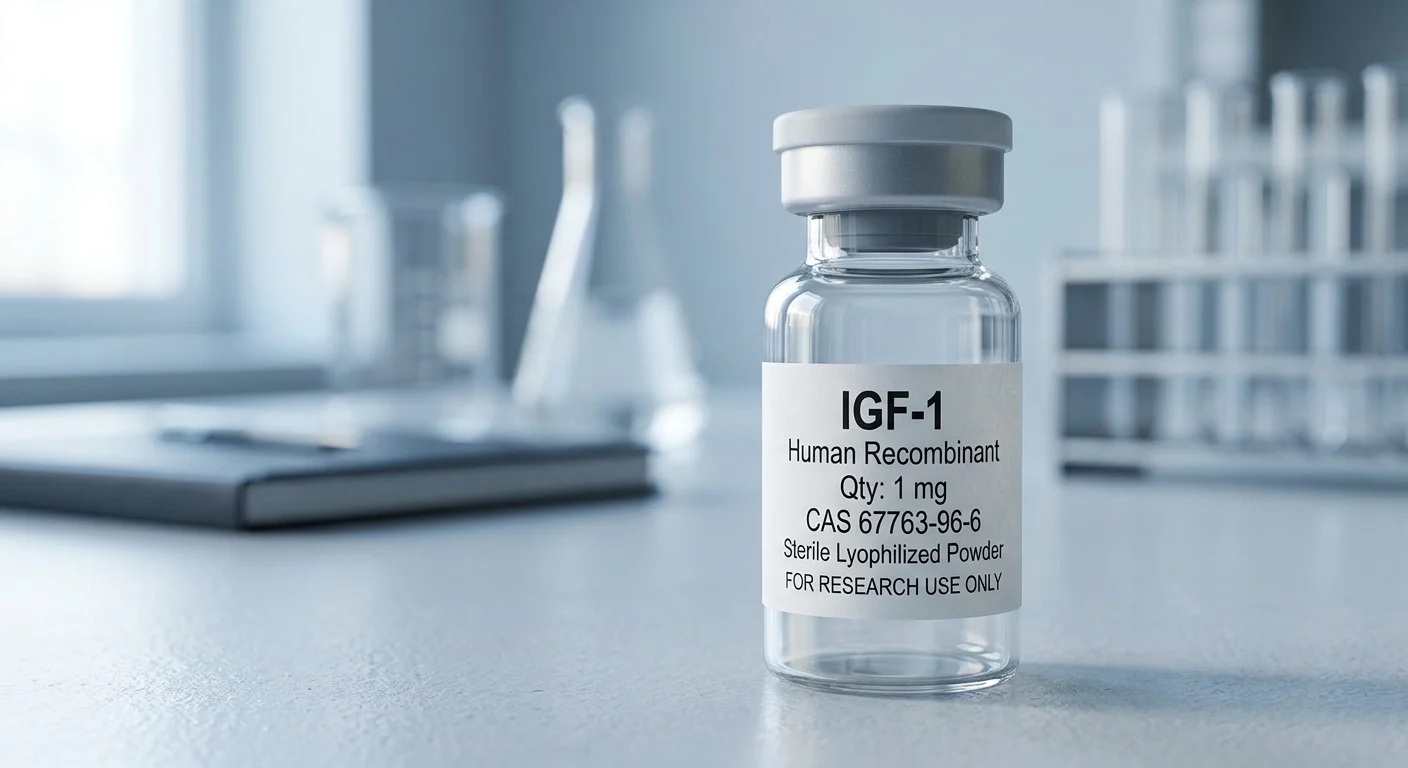
igf-1 for sale
Price range: $210.00 through $1,600.00
Amino Acid Chain: A single unglycosylated chain consisting of 70 residues, divided into:
- B-chain domain: 25 amino acids (containing the N-terminal)
- C-region linker: 12 amino acids connecting the domains
- A-chain domain: 35 amino acids (containing the carboxyl-terminal)
IGF-1 for Sale: What You Need to Know Before You Buy
If you are searching for “IGF-1 for sale,” it is essential to understand exactly what this substance is, its legal standing, and the significant risks associated with purchasing it from unregulated sources. Insulin-like growth factor 1 (IGF-1) is a hormone with legitimate medical applications, but it is also widely abused as a performance-enhancing drug. The market for IGF-1 online is fraught with legal gray areas, counterfeit products, and serious health dangers.
What Is IGF-1?
IGF-1 is a hormone produced naturally in the body, primarily by the liver, and plays a crucial role in growth and development. It is structurally similar to insulin and mediates many of the growth-promoting effects of human growth hormone (HGH). Levels of IGF-1 rise from birth until late puberty and then gradually decline.
Synthetic IGF-1 is manufactured for medical purposes and is classified as a prescription drug. It cannot be legally obtained or used without a prescription from a licensed healthcare provider.
The Critical Difference: Pharmaceutical IGF-1 vs. Research Chemicals
A crucial distinction exists between legitimate pharmaceutical IGF-1 and the products commonly sold online as “research chemicals.”
FDA-Approved IGF-1 (Mecasermin)
The only FDA-approved form of IGF-1 ismecasermin, sold under the brand nameIncrelex. It is approved for a very narrow indication: the long-term treatment of growth failure in children with severe primary IGF-1 deficiency or with growth hormone gene deletion who have developed neutralizing antibodies to GH. Mecasermin is administered by subcutaneous injection under strict medical supervision.
Even this approved product carries serious warnings, including severe hypoglycemia that can lead to seizures, intracranial hypertension, and tonsillar hypertrophy. Postmarketing reports have noted malignant neoplasms in children who received it.
IGF-1 LR3: The Unapproved “Research Chemical”
The IGF-1 most commonly sold online isIGF-1 LR3 (Long R3 insulin-like growth factor-1). This is a modified, longer-acting analog that isnot FDA-approved for any human indication. It is sold exclusively as an unapproved “research chemical” rather than a legal medicine.
IGF-1 LR3 is engineered with an amino acid substitution and extension that reduces its binding affinity for IGF-binding proteins, dramatically extending its half-life from about 10–30 minutes to nearly 20–30 hours. This makes it far more potent and unpredictable than native IGF-1.
The Legal Status of IGF-1 For Sale
Prescription Requirements
Like other prescription drugs, IGF-1 cannot be legally obtained or used without a prescription. Mecasermin is available only with a doctor’s prescription, and its use is restricted to specific pediatric growth disorders.
Sports Bans
IGF-1 and all its analogues are prohibited at all times by the World Anti-Doping Agency (WADA) under class S2 (Peptide Hormones and Growth Factors). This prohibition is in effect both in-competition and out-of-competition. The 2026 WADA Prohibited List explicitly names IGF-1 and its analogues.
Legal Risks of Purchase
Importing or distributing IGF-1 LR3 for performance enhancement may violate federal law. In Australia, it is illegal to use IGF-1 without a prescription. Purchasing these substances online exposes individuals to potential legal prosecution and the risk of receiving counterfeit or contaminated products.
Why “IGF-1 for Sale” Is a Major Safety Concern
Severe Hypoglycemia
The most acute danger of IGF-1 LR3 is severe hypoglycemia. IGF-1 mimics insulin’s action by driving blood sugar into cells. This can cause dizziness, sweating, shaking, headaches, confusion, and in severe cases, loss of consciousness or seizures. A 2010 case report found that a black-market injection vial sold as an IGF-1 product actually contained a His-tagged form of Long-R³-IGF-I—a variant “usually produced for biochemical studies”—whose effects in humans had not been elucidated.
Uncontrolled Tissue Growth
IGF-1 for sale promotes cell division. Unregulated use may lead to organ enlargement (including the heart and liver), joint pain and stiffness from soft-tissue overgrowth, and the development of acromegaly-like features such as enlarged hands and feet.
Cancer Risk
By encouraging cell proliferation, IGF-1 LR3 could theoretically fuel the growth of existing cancer cells. Excessive IGF-1 has been linked to an increased risk of certain cancers, including prostate, breast, and colorectal cancers. Experts caution that any substance accelerating cell division carries potential oncogenic risk.
Other Adverse Effects
Common side effects reported with mecasermin include hypoglycemia (in about 50% of users), lipohypertrophy at injection sites, tonsil hypertrophy, headache, and intracranial hypertension. Long-term use can disrupt natural hormonal balance.
The Research Chemical Market IGF-1 For Sale: What You Are Actually Buying
Legitimate chemical suppliers sell IGF-1 LR3 as an analytical reference standard for laboratory research. These products are explicitly labeled “For research use only. Not for human use. We do not sell to patients”. The products marketed to consumers for performance enhancement are fundamentally different—they are sold without regulatory oversight for purity, sterility, or dosage accuracy.
There is no standardized dosing for IGF-1 LR3 in humans. Any vendor offering dosage advice is providing unverified and potentially lethal information.
The Bottom Line
Searching for “IGF-1 for sale” will lead you to a substance that is either a strictly controlled prescription medication for a rare pediatric condition or an unapproved, unregulated research chemical with no established human safety profile. The risks of severe hypoglycemia, organ overgrowth, cancer promotion, and legal consequences are substantial. The only responsible choice is to avoid unregulated IGF-1 products entirely and consult a qualified healthcare professional for any legitimate medical concerns.
| Volume | 10 Vials, 100 Vials, 20 Vials, 50 Vials |
|---|
Be the first to review “igf-1 for sale”
Related products

Research Chemicals
Research Chemicals
Uncategorized
Uncategorized
Cannabinoids for Sale
Reviews
There are no reviews yet.