
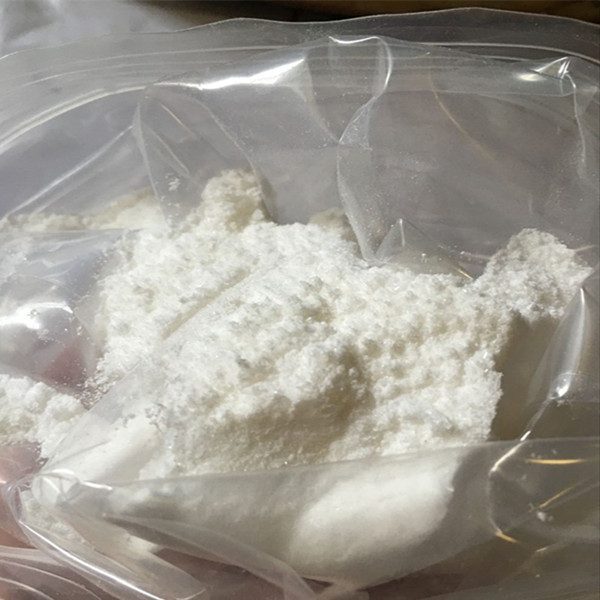
NDTDI ( Ergoline )
Price range: $950.00 through $1,300.00
NDTDI ( Ergoline ) is a specialized lysergamide derivative and synthetic ergot alkaloid, supplied as a certified reference material for 5-HT2A receptor binding assays and conformational analysis. Formulated to ≥99% purity, this novel psychoactive substance (NPS) standard enables pharmacological profiling via LC-MS/MS. Supplied with a batch-matched Certificate of Analysis. Strictly for in-vitro analytical research; not for human consumption.
Ergot Alkaloid Conformational Analysis: NDTDI ( Ergoline )
When neuropharmacologists and analytical toxicologists need to acquire NDTDI ( Ergoline ) for the calibration of high-resolution mass spectrometry instruments, securing a highly characterized lysergamide derivative is critical. NDTDI ( Ergoline ) represents a novel structural evolution in the synthetic ergot alkaloid family. Its distinct N-substitution requires precise analytical baselines to distinguish its unique fragmentation cascade from classical indoleamines like LSD, ALD-52, or 1P-LSD.
Core Pharmacological & Spectrometric Parameters
- IUPAC Classification: Synthetic Ergot Alkaloid (Lysergamide Derivative)
- Core Architecture: Tetracyclic ergoline ring system with novel N-substitutions
- Primary Diagnostic Ion (LC-MS/MS ESI+): Precursor-to-product transitions targeting the ergoline core cleavage
- Certified Purity: >= 99.0% (Verified via quantitative HPLC-UV)
- Intended Application: 5-HT2A receptor mapping, isomeric resolution, and conformational dynamics.
Clandestine Diversion & Street-Level Masking
In international customs databases, synthetic lysergamides are frequently intercepted after being absorbed onto cellulose matrices. NDTDI ( Ergoline ) and its structural analogs are routinely seized on paper substrates mislabeled as “art,” “collectibles,” or “research materials.” Furthermore, because of its structural similarity to classical hallucinogens, this compound is frequently misrepresented on the illicit market under sensationalized street names like “Acid,” “Tabs,” “Blotters,” “Lucy,” “Sugar,” and “Drops.” This deliberate mislabeling requires advanced spectrometric baselines to prove misrepresentation and track international adulteration networks.
Underground Monitoring & OSINT Forums
To anticipate new analog emergence, forensic chemists monitor underground communities. Facilities mapping NDTDI ( Ergoline ) cross-reference analytical data with anecdotal reports found on niche platforms. For ongoing receptor tracking, analysts frequently reference:
- The Shroomery: Monitoring the Advanced Mycology & Chemistry boards for discussions on ergot alkaloid extraction and lysergamide synthesis.
- Erowid Vaults: Cross-referencing historical data via the Erowid Psychoactive Archives to understand legacy ergoline pharmacology.
- Reddit Communities: Analyzing r/researchchemicals and r/drugnerds for global precursor trends.
- The Drug Users Bible (DUB): Reviewing the DUB Forums for real-world adulterant warnings and NBOMe contamination alerts.
Receptor Binding Kinetics & Isomeric Resolution
The primary analytical challenge with NDTDI ( Ergoline ) is identifying its specific binding affinity at the 5-HT2A and 5-HT1A receptors compared to scheduled isomers. Laboratories optimizing liquid chromatography parameters utilize this standard to map trace impurities. When labs profile NDTDI ( Ergoline ), they can link multiple street seizures to a single clandestine network based on chemical fingerprinting.
STATUTORY COMPLIANCE NOTICE: This dossier and the accompanying material are provided strictly for in-vitro analytical research, spectrometric calibration, and educational chemistry. It is explicitly NOT intended for human or veterinary consumption, nor is it approved for any pharmacological application.
Frequently Asked Questions (FAQ)
Q: How does NDTDI ( Ergoline ) differ from classical LSD in mass spectrometry?
A: While both share the tetracyclic ergoline core, the novel N-substitutions on NDTDI ( Ergoline ) alter its lipophilicity and yield unique secondary fragment ions during tandem mass spectrometry, requiring specific Multiple Reaction Monitoring (MRM) transitions.
Q: Is derivatization required for GC-MS profiling of lysergamides?
A: Lysergamides are highly susceptible to thermal degradation in standard GC inlets. Therefore, LC-MS/MS is the preferred method for profiling NDTDI ( Ergoline ), as it allows for ambient temperature ionization without destroying the delicate ergoline scaffold.
Q: Will this compound trigger a false positive on standard workplace drug screens?
A: Standard workplace immunoassays are generally not designed to detect complex synthetic lysergamides. Definitive identification requires chromatographic confirmation via LC-MS/MS using certified reference materials.
Complementary Forensic Reference Materials:
| Weight | 50g, 100g |
|---|
Related products

Powder Chemical
Powder Chemical
Powder Chemical
Powder Chemical
Powder Chemical
Powder Chemical
Powder Chemical
Powder Chemical