
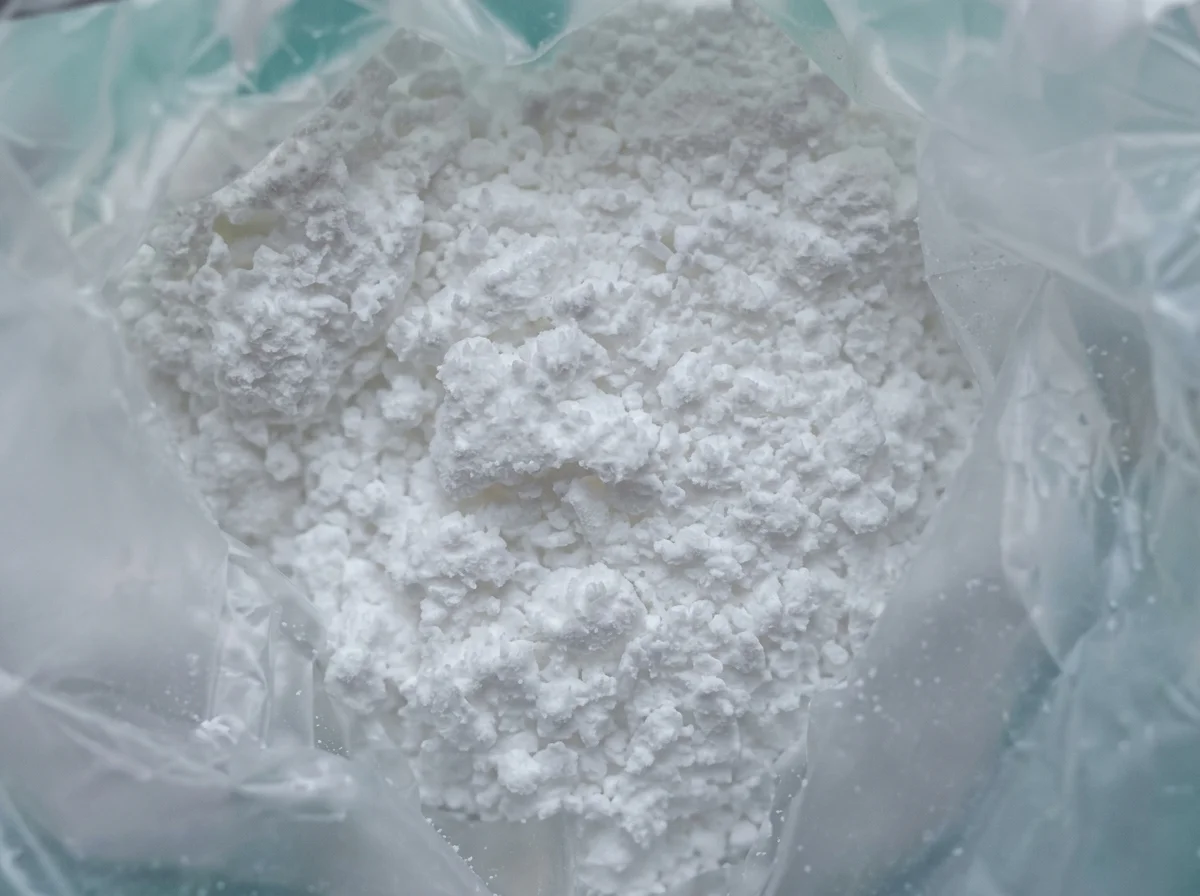
AM2233-powder
$150.00
Get ready to experience the power of AM-2233-Powder! Our full agonist for cannabinoid receptors is perfect for those looking for a fast-acting and highly potent supplement to help achieve their goals. With an extremely low Ki of 1.8nM at CB1 and 2.2nM at CB2, you can trust AM-2233 Powder to deliver amazing results – fast! Try it today and experience the power of AM-2233 Powder.
Advanced Forensic Profiling & SCRA Receptor Mapping
When forensic toxicologists need to source AM2233-powder for the calibration of high-resolution mass spectrometry, acquiring a definitively characterized synthetic cannabinoid is critical. Chemically recognized as a full agonist for cannabinoid receptors, this compound exhibits an extremely low Ki of 1.8nM at CB1 and 2.2nM at CB2. Because clandestine networks continuously alter chemical scaffolds, facilities that acquire AM2233-powder rely on this ≥99.9% pure reference standard to map receptor binding kinetics and differentiate synthetic artifacts in complex biological matrices.
Core Spectrometric & Pharmacological Parameters
- Chemical Classification: Synthetic Cannabinoid Receptor Agonist (SCRA) / Naphthoylindole derivative
- Receptor Affinity: Full agonist at CB1 (Ki = 1.8nM) and CB2 (Ki = 2.2nM) receptors
- Primary Diagnostic Ion (LC-MS/MS ESI+): Precursor-to-product transitions targeting the naphthoyl core cleavage
- Certified Purity: ≥ 99.0% (Verified via quantitative HPLC-UV & NMR)
- Intended Application: Receptor binding assays, isomeric resolution, and forensic toxicology screening.
Clandestine Diversion & Global Street-Level Masking
In international customs databases, synthetic cannabinoids are frequently intercepted after being sprayed onto botanical substrates. These matrices are routinely seized and mislabeled globally: as Spice or K2 (USA), Black Mamba or Bonsai (Europe/UK), Kronic (Australia), and Synthetic Cannabis (Asia). This deliberate mislabeling is exactly why public health labs acquire AM2233-powder reference standards to prove misrepresentation, track international adulteration networks, and warn officials about specific toxidromes.
OSINT Forums & Synthetic Cannabinoid Monitoring
To anticipate new analog emergence, forensic chemists monitor underground communities. Facilities analyzing this compound cross-reference analytical data with anecdotal synthesis reports found on niche platforms. For ongoing SCRA tracking, analysts frequently reference:
- Erowid Vaults: Cross-referencing historical pharmacological data to understand legacy synthetic cannabinoid stability and dosage thresholds.
- Bluelight.org: Reviewing the Emerging Drugs board for real-world adverse event reports and cutting agent profiles.
- Reddit Communities: Analyzing r/ResearchChemicals and r/chemistry for global precursor trends and analytical warnings.
By leveraging these networks, researchers who source AM2233-powder can optimize their chromatographic methods while adhering to strict laboratory safety limits.
Analytical Differentiation & Metabolic Mapping
Although toxicological and physiological properties of novel naphthoylindoles are still being mapped in clinical literature, definitive analytical baselines are essential. ChemNexis Pharma synthesizes AM2233-powder in compliance with modern laboratory standards to ensure absolute baseline accuracy for researchers mapping its structural relationship to classical AM-series variants. This certified solution standard is suitable for use as a starting material in calibrators or controls for forensic analysis.
Statutory Compliance & Analytical Handling
Human beings are not eligible for consuming this drug. Researchers are strictly using this material as a research chemical in forensic laboratories. Facilities that source AM2233-powder must maintain strict chain-of-custody logs and store the compound in a cool, dry place, ensuring stability for up to 2 years under the right storage conditions.
STATUTORY COMPLIANCE NOTICE: This reference material is provided strictly for in-vitro analytical research, spectrometric calibration, and educational chemistry. It is explicitly NOT intended for human or animal consumption. End-users must comply with all local precursor monitoring regulations.
Frequently Asked Questions (FAQ)
Q: How does the naphthoylindole scaffold affect mass spectrometry fragmentation?
A: The naphthoyl core yields distinct secondary fragment ions during tandem mass spectrometry. Analysts utilizing AM2233-powder can easily distinguish these specific signatures from standard indole-based synthetic cannabinoids.
Q: Is derivatization required for GC-MS profiling?
A: Synthetic cannabinoids are highly susceptible to thermal degradation in standard GC inlets. Therefore, labs prefer LC-MS/MS, allowing for ambient temperature ionization without destroying the delicate molecular scaffold.
Q: Will this compound trigger standard workplace drug screens?
A: Standard immunoassays are not designed to detect complex, novel synthetic cannabinoids. Definitive identification requires chromatographic confirmation, which is why toxicologists source AM2233-powder.
Complementary Forensic Reference Materials:
Expand your analytical library by pairing this indole standard with our other verified synthetic CRMs:
Related products

Cannabinoids for Sale
Cannabinoids for Sale
Cannabinoids for Sale
Cannabinoids for Sale
Cannabinoids for Sale
Cannabinoids for Sale
Cannabinoids for Sale
Cannabinoids for Sale