
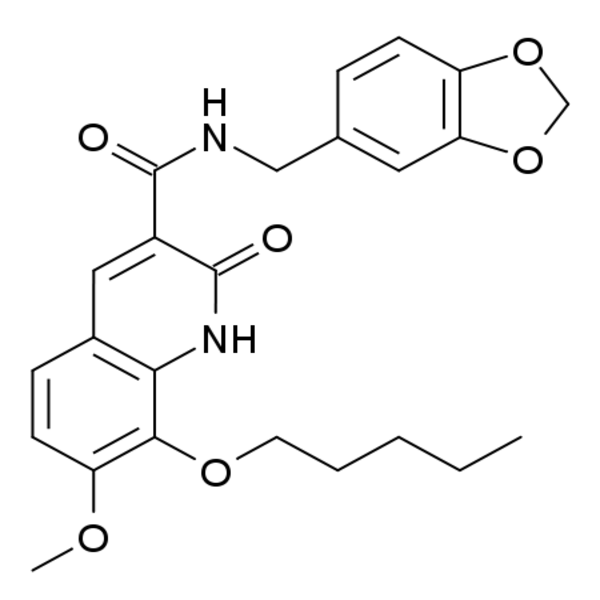
JTE-907

Price range: $188.00 through $2,600.00
Guarantee the integrity of your next grant-funded immunology study with ChemNexis Pharma’s certified reference materials. Sourced for uncompromising batch-to-batch consistency, this CB2 selective inverse agonist eliminates assay variability and ensures precise radioligand displacement. Available exclusively to accredited research facilities for in-vitro receptor mapping and neuroinflammatory pathway analysis.
JTE-907
Formulated for advanced receptor profiling, JTE-907 serves as a critical analytical benchmark for studying cannabinoid CB2 inverse agonism. Supplied by ChemNexis Pharma, this highly selective ligand facilitates precise radioligand displacement assays and immunomodulatory pathway mapping. It is strictly allocated for in-vitro pharmacological research and does not possess clinical approval for therapeutic administration.
Product Overview & Definition
In the specialized field of molecular pharmacology, characterizing constitutive receptor activity requires highly selective analytical tools. JTE-907 functions as a potent and highly selective cannabinoid CB2 receptor inverse agonist. Unlike neutral antagonists that merely block agonist binding, this specific compound actively suppresses basal receptor signaling. This unique mechanism makes it an indispensable reference standard for mapping downstream immunomodulatory cascades. Researchers investigating peripheral inflammatory pathways utilize JTE-907 to successfully differentiate between true inverse agonism and neutral competitive antagonism at the targeted CB2 binding site. JTE-907
Technical & Research Context
The primary pharmacological value of JTE-907 lies in its exceptional binding affinity and selectivity profile. It demonstrates high-affinity binding to human, rat, and murine CB2 receptors, effectively displacing standard radioligands in competitive displacement assays. Because it lacks significant affinity for the CB1 receptor, it allows scientists to isolate CB2-mediated effects without the confounding psychoactive variables typically associated with central nervous system CB1 activation. Consequently, the compound is frequently employed in cellular models to study the upregulation of specific cytokines and the modulation of macrophage activity. When designing complex binding assays, having a reliable inverse agonist is critical for establishing accurate baseline measurements. For deeper pharmacological background, researchers can review the peer-reviewed lead optimization data published via NCBI.
Key Characteristics
- Receptor Target: Cannabinoid Receptor 2 (CB2)
- Mechanism of Action: Selective Inverse Agonist
- Molecular Weight: ~438.48 g/mol
- CAS Registry Number: 282089-49-0
- Primary Utility: In-vitro binding assays, constitutive activity profiling, and inflammatory cascade mapping
Relevant Applications & Research Context
Laboratories focusing on neuroimmunology and peripheral inflammation rely heavily on JTE-907 to establish baseline inverse agonist responses. By applying the ligand, researchers can accurately quantify the reduction in basal cAMP levels or monitor critical shifts in G-protein coupling efficiency. Furthermore, the material is instrumental in structure-activity relationship (SAR) studies aimed at developing novel immunosuppressive agents. When sourcing JTE-907 for these complex cellular assays, analytical precision is paramount to ensure reproducible Ki and IC50 calculations. The ability to reliably suppress constitutive activity allows pharmacologists to map the precise physiological role of the CB2 receptor in immune cell regulation. JTE-907
Related Compounds & Product Family
Within the broader spectrum of cannabinoid research tools, JTE-907 is often compared to other selective ligands such as AM-630 and SR-144528. While AM-630 is another widely utilized CB2 inverse agonist, this compound possesses a distinct chemical scaffold. This structural divergence provides researchers with an alternative molecular class to confirm assay validity and confidently rule out scaffold-specific off-target effects during high-throughput screening campaigns. Explore our full range of Cannabinoid Research Compounds to identify complementary ligands for your experimental design.
Documentation & Quality Considerations
ChemNexis Pharma ensures that every batch is accompanied by comprehensive analytical documentation. Certificates of Analysis (CoA) detail chromatographic purity and spectroscopic verification, allowing laboratory directors to maintain strict compliance with internal quality management systems and regulatory guidelines. Additional verified specifications are catalogued in our Analytical Reference Standards collection.
Storage & Handling Information
To preserve the structural integrity of the molecule, the material should be stored in a desiccated environment at controlled room temperature or under refrigeration, strictly protected from direct UV light and atmospheric moisture.
About ChemNexis Pharma
As a specialized distributor of complex pharmacological probes, ChemNexis Pharma provides JTE-907 exclusively to verified academic and commercial research institutions. Our supply chain prioritizes chemical stability and rigorous batch-to-batch consistency, ensuring that your receptor profiling experiments yield reliable, publication-grade data.
Frequently Asked Questions
Q1: What defines an inverse agonist compared to a neutral antagonist?
An inverse agonist binds to the same receptor as an agonist but induces a pharmacological response opposite to that agonist, specifically by suppressing constitutive (basal) receptor activity. A neutral antagonist merely blocks agonists without affecting basal signaling.
Q2: Why is CB2 selectivity critical in immunomodulatory research?
CB2 receptors are primarily expressed on immune cells. Selectivity ensures that observed anti-inflammatory or immunomodulatory effects are strictly mediated by the peripheral immune system, avoiding the central psychoactive effects mediated by CB1 receptors.
Q3: What solvent systems are recommended for reconstituting the powder?
Researchers typically dissolve the compound in DMSO or ethanol for in-vitro assays, ensuring the final solvent concentration in the cellular media remains below 0.1% to prevent cytotoxicity.
Q4: How does this ligand compare to SR-144528 in binding assays?
Both are highly selective CB2 inverse agonists, but they belong to different chemical classes. Using both in parallel assays helps confirm that observed effects are receptor-specific rather than artifacts of a particular chemical scaffold.
Q5: Can this material be used for in-vivo animal studies?
While the compound has demonstrated oral activity and anti-inflammatory effects in animal models, any in-vivo application requires independent institutional IACUC approval and rigorous internal toxicology validation by the research facility.
Q6: What documentation is provided to verify batch purity?
Every shipment includes a batch-specific Certificate of Analysis (CoA) verifying identity via NMR/Mass Spectrometry and purity via HPLC.
Q7: How should the compound be handled to prevent degradation?
Handling should occur in a low-humidity environment. Aliquoting the stock solution and storing it at -20°C prevents repeated freeze-thaw cycles and moisture ingress.
Q8: Is this product approved for human therapeutic use?
No. This material is strictly classified as an analytical reference standard and research probe. It is not approved by any regulatory body for human or veterinary clinical administration.
Q9: Where can researchers find community discussion on CB2 assay design?
Academic researchers frequently exchange methodology insights on platforms such as the r/pharmacology community on Reddit. These discussions are user-generated and supplementary only, and should never replace peer-reviewed literature for protocol decisions.
Q10: What information should I request from a supplier before purchasing?
Always request a current CoA, confirmed CAS number, stated purity percentage with analytical method, and storage recommendations. ChemNexis Pharma provides all of these with every shipment.
Secure Your Supply
Accurate pharmacological data begins with verified reference materials. For bulk quotation requests, technical data sheet downloads, or inquiries regarding related cannabinoid receptor ligands, contact the ChemNexis Pharma analytical sales division directly.
| Quantity | 1 Kg, 10 Grams, 100 Grams, 20 Grams, 50 Grams, 500 Grams |
|---|
Related products


LIQUID CHEMICALS

Research Chemicals

Research Chemicals

Cannabinoids for Sale

Research Chemicals

Research Chemicals

Research Chemicals

Research Chemicals